Rice Lake Resources
Instrument Buying: The Price Tag Is Only Half the TCO
The 45% Rule
The price on your instrument quote is roughly half of what you'll actually spend. Across seven years of tracking purchases, I've found that the sticker price of a lab or field instrument covers only 45–60% of its five-year total cost of ownership. The rest goes to calibration, batteries, software licenses, training hours, and documentation gaps that only surface when a tech is standing in front of a dead meter.
What I mean is that the "cheap" instrument isn't the one with the lowest invoice—it's the one that stops costing you money after the purchase order clears. That's a different number, and most buyers don't calculate it until they've been burned twice.
Why I Started Tracking This
I manage procurement at a 140-person industrial maintenance company. Our instrumentation budget runs about $310,000 annually, and I've been tracking every order in our ERP system for seven years. During that time I've negotiated with 40+ vendors and audited our 2023 spending line by line—which is when the pattern became impossible to ignore.
In Q2 2024 alone, we spent $4,100 on "unexpected" replacement parts and calibration fees that weren't in any original quote. That's roughly 1.3% of the annual budget leaking through line items nobody flagged at purchase time. Small, but cumulative. And the vendors who priced transparently from the start were the ones who had fewer of those surprises.
Where the Money Actually Goes
Water Meters and the Documentation Problem
When we evaluated Sensus iPERL meters in 2022, the deciding factor wasn't the unit price—it was that the Sensus water meter manual was actually usable. Our field crew learned installation in a single day. The previous vendor's documentation required a three-day scheduled training, which at our labor rate added roughly $2,700 in hidden cost per crew.
The Sensus iPERL water meter manual isn't exciting reading. But it's indexed, it has clear diagrams, and it covers the error codes our techs actually encounter. I'll take a well-documented product over a slightly cheaper one with a 60-page PDF that reads like it was translated twice. (Should mention: our crew still calls the vendor's tech line for the weird stuff. The manual handles the 80% case.)
Thermal Camera Price and the Calibration Trap
Handheld thermal camera price ranges from about $300 to $3,000+ depending on resolution and range (based on 2024 distributor quotes; verify current pricing). But the number that mattered for us wasn't the purchase price—it was the $380 annual calibration service and the $120 software license that "enabled" file export. Over five years, that's another $2,500 on top of a $1,200 camera.
People think expensive cameras deliver better accuracy. Actually, cameras that deliver consistent accuracy can charge more—because the calibration chain is what justifies the premium. If you're not doing quantitative thermography, you may not need that chain at all. That's the causation running the other way from how most buyers read the catalog.
Caliper Battery: The Cheapest Cost Me More
We bought 20 digital calipers at $35 each. Six months later, half were drifting by 0.02mm on the gauge blocks. The calipers were fine. The culprit was the $0.30 batteries our buyer sourced separately to "save money."
Switching to name-brand cells at $1.10 each cut measurement drift to near zero. The "cheap" caliper battery cost us roughly $600 in rework and inspection time before we figured it out. Never expected a battery to be the failure point. Turns out the caliper was never the problem—the power source was.
pH Meters and Training Time
The question isn't "how to use mettler toledo ph meter"—Mettler Toledo publishes solid guides, and their pH meters are standard for a reason. The question is how long it takes a new tech to use one correctly in the field, at 6am, with cold hands and a cart full of samples.
We built a two-page laminated card for our crew because the included manual was 40 pages. That card saved an estimated 8 hours of supervisor time per new hire. The pH meter itself cost $400. The training card cost us a Saturday afternoon and a laminator. Best ROI in the whole instrument closet.
When Unit Price Is the Right Metric
Not every purchase needs this analysis. If you're buying one multimeter for occasional use, compare three models, pick the one with the best warranty, and move on. TCO thinking pays off when you're buying five or more units, maintaining equipment over multiple years, or operating in environments where downtime carries real cost.
I also want to push back on something I hear from smaller buyers: the idea that you should accept bad service because your order is small. Our first order with our current meter supplier was $180—three flow sensors and a replacement display. They treated it like a $20,000 contract. Three years later, they got the $20,000 contract. The vendors who quoted us "minimum order requirements" for a two-calipers order? We never called them for the big stuff.
Small doesn't mean unimportant. It means potential.
Where This Breaks Down
I have mixed feelings about extended warranties. On one hand, they feel like a tax on people who can't absorb risk. On the other, the one time we skipped it, a $2,800 thermal camera died at 14 months. I now buy warranties on items over $1,500 and self-insure the rest—which is just acknowledging that TCO analysis has limits.
And when a pH meter dies during a compliance audit, you don't comparison-shop. You buy the one that ships overnight, eat the premium, and run the TCO numbers afterward for next quarter's budget. That's not a failure of the method. It's just admitting that sometimes the lowest total cost today is the one that keeps the plant running.
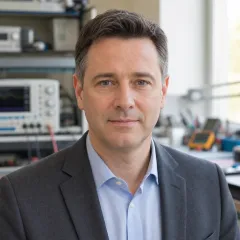
Marcus Feld
Marcus Feld is an electrical test and measurement analyst specializing in multimeters, oscilloscopes, clamp meters, insulation testers, spectrum analyzers, and data loggers. He applies IEC 61010-2-030 and IEC 61010-031 concepts while examining measurement category, bandwidth, true-RMS response, input loading, and stated uncertainty. His work helps maintenance engineers and test teams choose safe instruments with performance suited to the signals and environments they actually measure.